
Updated November 2026
The short version
- Every passenger elevator needs a hands-free, push-button emergency phone that reaches a person who can act, at any hour.
- The 2019 edition of ASME A17.1 adds on-panel messages for passengers who cannot hear or speak, video for entrapment checks and backup power for the phone.
- Many elevator phones still dial out on a copper POTS line, and carriers are retiring copper.
- Replace the line before it fails and test a call from the car before the POTS line is canceled.
What the elevator code requires
ASME A17.1, the Safety Code for Elevators and Escalators, is the code local jurisdictions across the United States use for elevators. The U.S. Access Board summarizes its core emergency phone requirements this way:
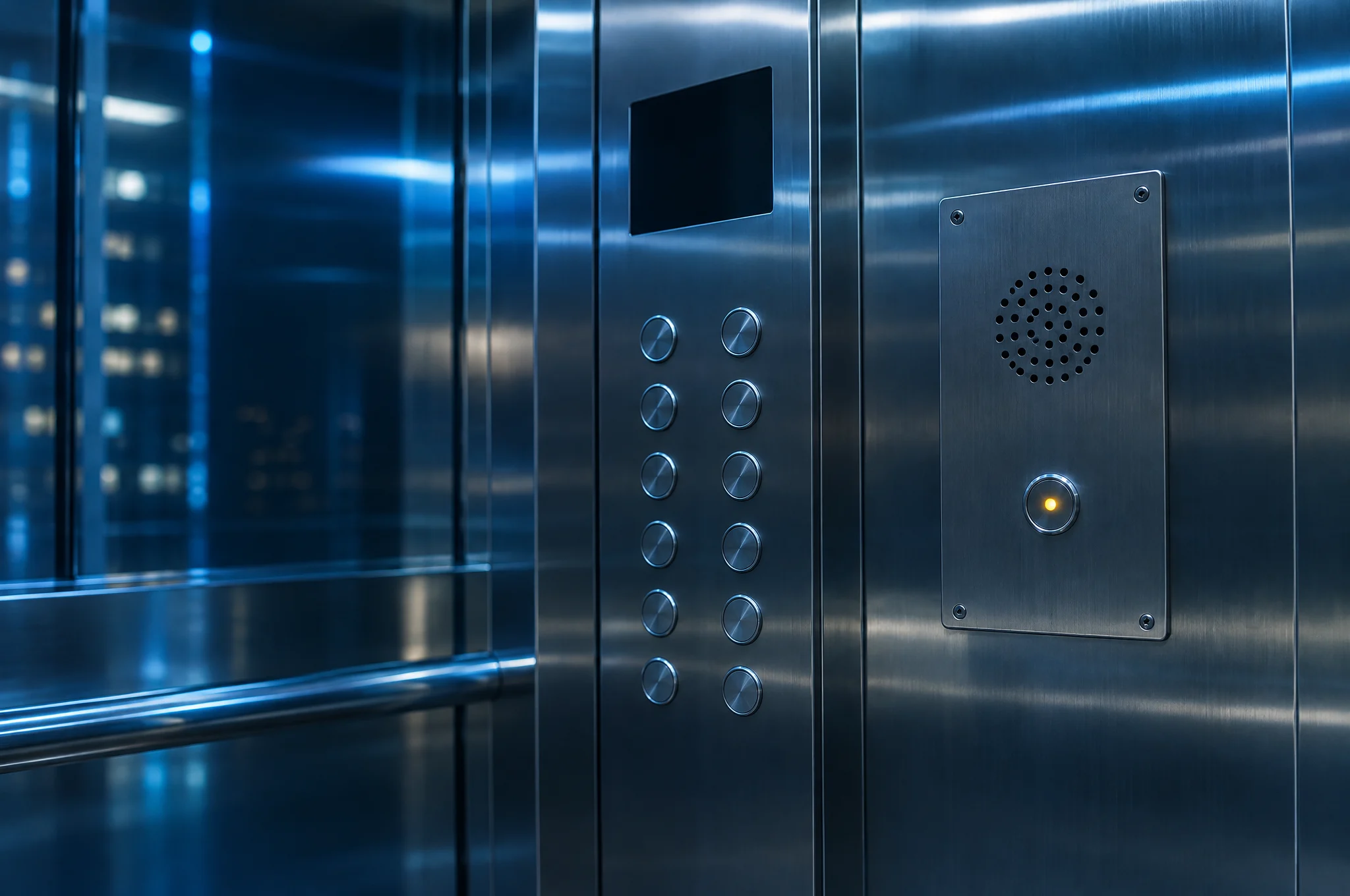
- A two-way means of emergency communication in every passenger elevator car
- Push-button activation, with the button permanently identified
- Calls go to authorized personnel, never to an automated answering system
- A visual signal in the car confirms that the call has been received
- The person answering can learn the building location and elevator number
- No handset in the car, and operating instructions posted in the car
The 2019 edition adds that if a call is not acknowledged within 45 seconds, it must be sent automatically to an alternate on-site or off-site location.
Who must answer the elevator phone
The code requires a communications means between the car and a location staffed by authorized personnel who can take appropriate action. A fire department standard quoting the 2019 edition describes this as a constantly attended location, in the building or at a monitoring location, approved by the authority having jurisdiction.
In practice that means someone answers every call, at any hour, every day. Routing the phone to a voicemail box or an automated system does not meet the code. The phone line has to work around the clock too, or a call never reaches that person.
What newer code editions add
The 2019 edition of ASME A17.1 expanded what an elevator emergency phone must do. Requirements that apply to each car include:
- Call acknowledged on the panel
- What it means: A message on the phone panel, sent by the person answering, confirms the call is connected.
- Text for passengers who cannot hear or speak
- What it means: On-panel messages let the person answering ask questions and get responses from a passenger who cannot communicate by voice.
- Help is on the way
- What it means: The person answering can display a message telling passengers help is coming.
- Video into the car
- What it means: Authorized personnel can see passengers anywhere on the car floor to assess an entrapment.
- Backup power
- What it means: If the phone runs on building power, it must switch to auxiliary power that keeps it working at least 4 hours.
- Automatic line check
- What it means: The phone line, or the VoIP, network or other means used instead, must be checked automatically at least once a day.
Building codes can add their own rules. For example, one state building agency notes that the 2021 International Building Code requires new elevators to include a text communication system along with voice, but does not require video. Your local inspector confirms which edition and which rules apply to each elevator.
How the ADA applies
The ADA Standards build on ASME A17.1 rather than replacing it. According to the U.S. Access Board, the ADA requires the emergency phone push button and other controls to meet its rules for operable parts, and the button must carry a specified tactile phone symbol and braille. Operating instructions and the label for the visual signal must meet the rules for visual characters.
What happens when the POTS line fails
Many elevator phones still dial out over a copper POTS line. Carriers are retiring copper. For example, AT&T aims to shut down its copper network by 2029. When the line fails or is discontinued, a passenger who presses the button may reach no one.
Under the 2019 edition, a failed daily line check triggers an "ELEVATOR COMMUNICATIONS FAILURE" light and an audible signal at the designated landing near the fire recall switch, and they keep going until the line works again. For the building, a dead elevator phone line can mean:
- Elevator entrapments with no working emergency phone
- A required safety device out of service, which an inspector can flag
How to replace an elevator phone line
The code allows means other than a telephone line, such as VoIP, a network or an intercom, as long as that means is verified the same way. The right replacement depends on the elevator's phone, your elevator contractor and what your inspector accepts. Before you cancel a POTS line:
- Confirm with your elevator contractor what the car's phone needs, including the phone number it uses and any text or video features.
- Choose a connection with backup power, such as cellular, LTE or 5G, or a VoIP adapter on the building's internet connection.
- Make sure calls still reach the staffed location that answers your elevator phones today.
- Make a test call from each car, and confirm the daily line check passes on the new connection.
- Keep a record of each elevator, its new line and its test for your inspector.
How 5x5 Telecom can help
5x5 finds every POTS line in your building, including each elevator phone line, and confirms what each system needs with your elevator contractor and local inspector. We replace each line with the right combination of VoIP adapters, cellular, LTE, 5G and internet connections, with battery backup, and work with your existing monitoring company, so you do not need to change.
Every elevator phone is tested before its POTS line is canceled, and you get a record of every line we replaced. Our US-based team supports the new lines from then on. During business hours, every ticket gets a first reply within 60 minutes. Outside business hours, including weekends and holidays, emergencies get the same 60-minute first reply.
Related services and guides
Sources
- U.S. Access Board: Elevators and platform lifts (emergency communication)
- Wisconsin DSPS: Elevator text emergency communication requirements
- Elevator World: Help is on its way
- City of Santa Clara Fire Department: Emergency elevator communication systems (quotes ASME A17.1-2019)
- Fierce Network: AT&T is making headway on its copper retirement plan (September 2025)